


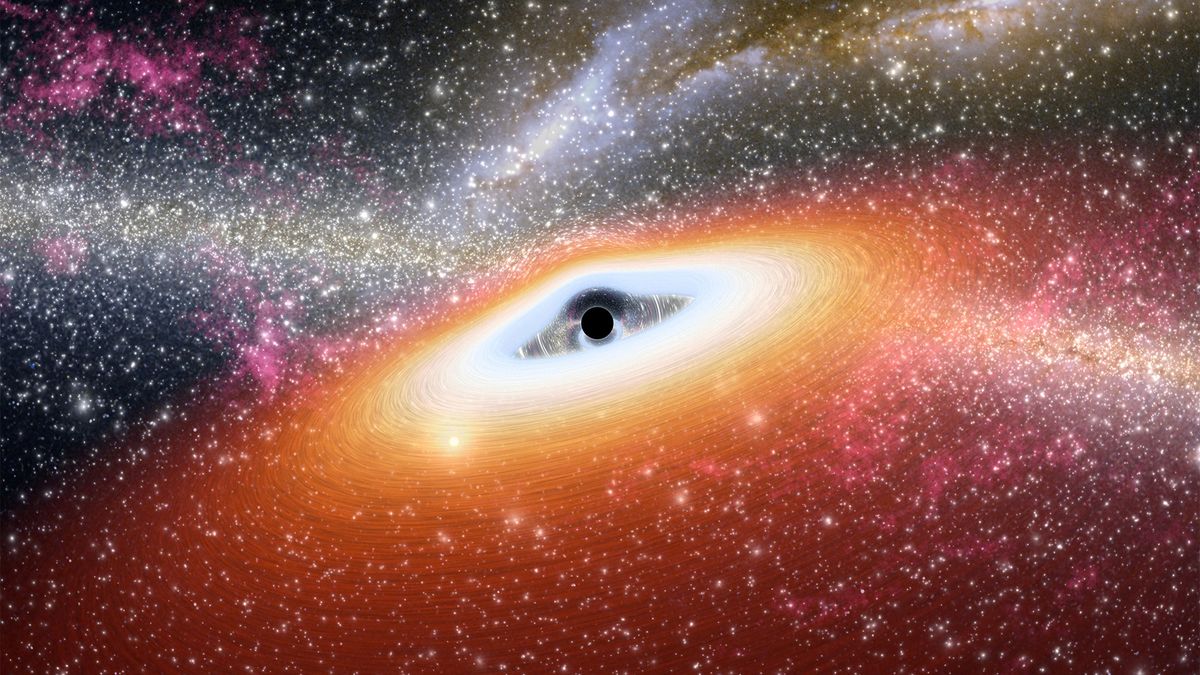
Despite a primary diet of gas and dust, black holes will consume anything that comes too close — meaning moons, planets and even stars are on the cosmic menu. But does this mean black holes greedily suck in everything around them, like cosmic vacuum cleaners, as commonly imagined?
The answer is no. To feed and grow, black holes actually need a little luck, and a big, bright disk of matter around them.
“Often we think of black holes as sucking matter in, like a vacuum cleaner. But that isn’t a great way to think about black holes,” John Regan, a Royal Society University research fellow at Maynooth University who specializes in black holes, told Live Science.
“In terms of the size of the galaxy around it, the black hole is tiny,” Regan said. “So, in fact, especially for small black holes, you’re nearly better off thinking of them like feathers in the wind.”
Related: A black hole ‘assassin’ ripped a star to shreds and left its guts strewn about the galaxy
This analogy points to the…

